Lymphatic drainage for your face: what it does, and how to do it properly
Morning puffiness isn't a skin problem, it's a fluid problem. Here's how facial lymphatic drainage actually works, a five-step routine you can do at home, and why active muscle work is the part most guides leave out.
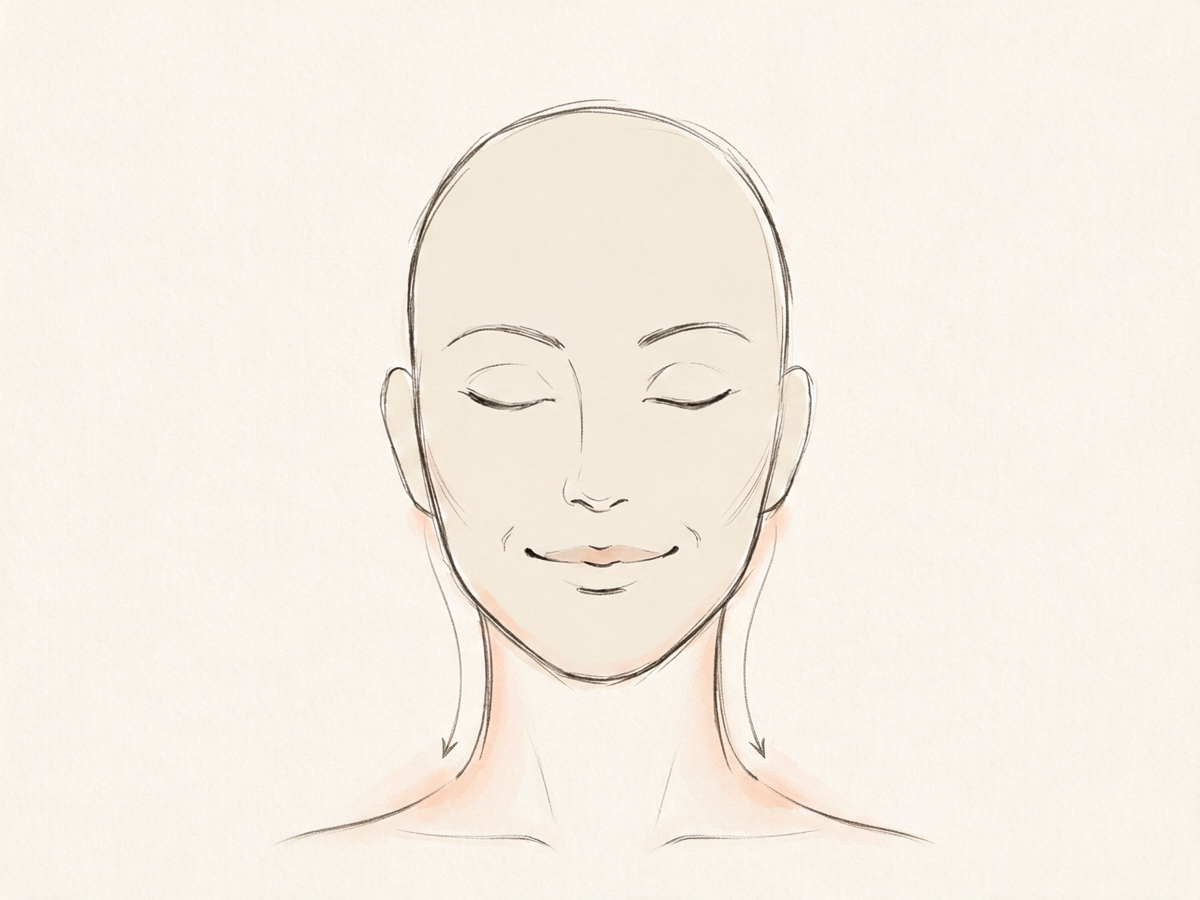
Quick answer
Lymphatic drainage for the face is a gentle massage technique that encourages excess fluid to move from puffy areas towards the lymph nodes at your ears, jaw and collarbone, where it re-enters circulation. Unlike blood, lymph has no pump of its own — it relies on muscle contraction and physical movement to flow. That's why the technique uses feather-light strokes in one direction, and it's also why active facial exercise complements massage so well: working the muscles under the skin is what moves lymph all day, not just during the five minutes you massage. Most people notice visibly reduced puffiness within minutes of a proper session.
If you've ever woken up with a puffy face before an important morning, you've met your lymphatic system. Most guides to fixing it jump straight to a massage routine. It's worth taking sixty seconds to understand the mechanism first, because the mechanism tells you exactly how to do the technique properly — and why the most effective version involves more than massage.
What the lymphatic system is doing under your skin
Your blood circulates because your heart pumps it. Lymph — the clear fluid that carries waste products and immune cells out of your tissues — has no pump at all. It moves because you move: muscle contractions squeeze the lymph vessels, and one-way valves make sure the fluid heads in the right direction, towards clusters of lymph nodes. For your face, those nodes sit in front of and behind your ears, under your jaw, and down the sides of your neck towards your collarbone.
When you sleep, you stop moving and you lie flat. Fluid that would normally drain down and away settles into the loose tissue of the face instead — especially around the eyes, where the skin is thinnest. Add salt from last night's dinner, a glass of wine, or a short night, and you get the familiar morning puffiness.
That's not a flaw in your skin. It's gravity and stillness. Which is why the fix is movement.
The technique: five steps, feather-light
Lymph vessels sit just beneath the skin's surface, so the correct pressure is remarkably light — roughly the weight of your fingers resting on your face. Pressing harder doesn't drain better; it just bypasses the lymph vessels entirely. Always stroke in one direction, towards the nodes.
- Open the drains first. Spend twenty seconds gently stroking down the sides of your neck, from jaw towards collarbone. This clears the path everything else will drain into — like unblocking the plughole before you pull the plug.
- Under-eye area. With your ring fingers, sweep from the inner corner of each eye outwards towards your temples. Five slow passes. The ring finger is the standard advice for a reason — it's your weakest, so it naturally presses lightest.
- Cheeks. Sweep from the sides of your nose outwards across the cheeks towards your ears. Five passes.
- Jawline. From the centre of your chin, stroke along the jaw towards the back of the ears, then down the neck. Five passes.
- Finish at the collarbone. A final few strokes down the neck to send everything on its way.
The whole thing takes under five minutes. Done in the morning, the change in puffiness is often visible immediately — this is one of the few practices in facial care where the feedback is same-day.
The part most guides leave out
Here's the thing the mechanism makes obvious: massage moves lymph for the five minutes you're doing it. Muscle contraction moves lymph all day.
Because the lymphatic system relies on muscle activity as its pump, the tone and movement of your facial muscles is a standing contribution to drainage. A face that regularly works through its full range — lifting the cheeks, engaging the jaw, mobilising the brow — is mechanically pumping its own lymph in a way a sedentary face isn't. Passive massage and active exercise aren't competing approaches; they're the two halves of the same system.
That's the logic behind pairing a short drainage routine with a daily facial yoga practice. The massage handles the acute morning puffiness; the muscle work handles the baseline. (And unlike massage, muscle work compounds — tone built over weeks keeps contributing whether or not you did your routine that morning. The evidence on that is covered in does facial yoga actually work.)
If you're deciding between tools and techniques, facial yoga vs gua sha covers where a stone fits into this picture — the short version is that gua sha is one more way of doing the passive half, not a replacement for the active half.
Lifestyle levers that do more than any massage
Since fluid balance is a whole-body affair, a few unglamorous habits outweigh technique:
- Sleep slightly elevated if morning puffiness is a recurring problem — an extra pillow lets gravity work for you all night.
- Watch evening salt, which holds water exactly where you don't want it.
- Drink water through the day in steady sips; dehydration makes the body retain fluid rather than release it.
- Move your body. A thirty-minute walk does more for whole-body lymph flow than any facial routine, because the big muscles of the legs are the system's main pump.
One honest caveat
Everything here applies to ordinary, symmetrical, fades-by-lunchtime puffiness. Swelling that is persistent, painful, one-sided, or accompanied by swollen lymph nodes isn't a cosmetic matter and isn't something to massage at home — that's a conversation with your doctor.
For everything else: light hands, one direction, towards the nodes — and let your muscles do the day shift.
Frequently asked questions
- What does lymphatic drainage actually do for your face?
- It moves accumulated fluid out of the tissues of the face towards the lymph nodes, which reduces puffiness — most visibly around the eyes, cheeks and jawline. It doesn't change muscle tone or skin structure; it changes how much fluid is sitting in the tissue on a given morning.
- How often should I do lymphatic drainage on my face?
- Daily is fine, because the pressure is so light. Many people do a short version in the morning when puffiness is at its worst, after sleeping flat has let fluid settle in the face overnight.
- Why is my face puffy in the morning?
- Lying flat for hours lets fluid distribute into the face rather than draining downwards, and salt, alcohol and poor sleep all make it worse. Normal morning puffiness fades over the day. Swelling that persists, is one-sided, or comes with pain is a different thing — see a doctor for that.
- Should lymphatic drainage massage hurt?
- No. Lymph vessels sit just under the skin, so the correct pressure is barely more than the weight of your fingers. If you're pressing hard enough to stretch or drag the skin, you're working the muscle, not the lymph — which is a fine thing to do, but it's a different practice.
Try it yourself
The only facial yoga app that tells you if it’s working.
Real-time AI scoring on your iPhone’s TrueDepth camera. Eight minutes a day, on-device, no guesswork.